
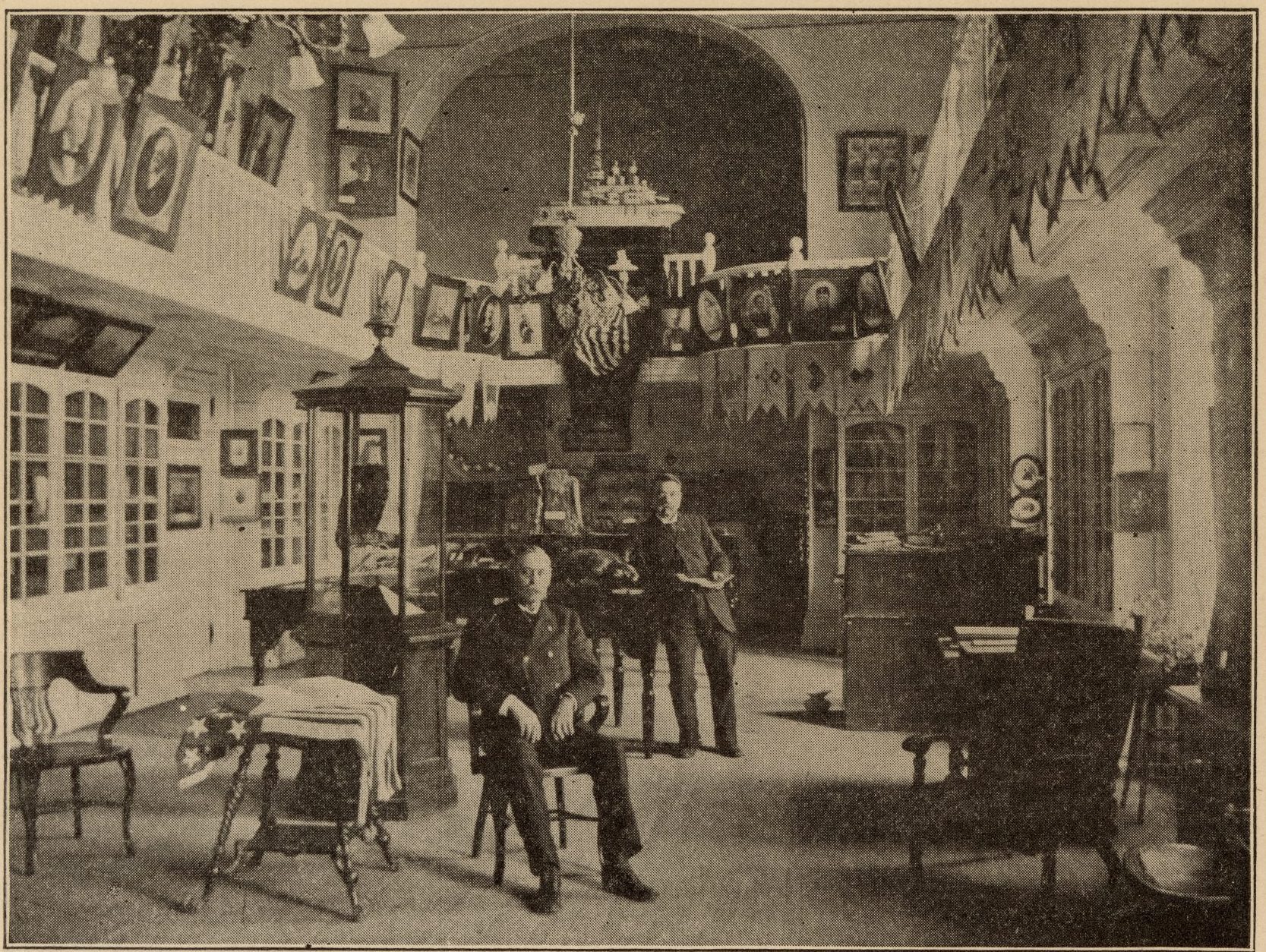
Hosea Rood in the G.A.R. Memorial Hall at the Wisconsin State Capitol.
On May 30th, 1845, Marianna Rood (nee Thorngate) and her husband Charles Persons Rood gave birth to their first child, Hosea Whitford Rood. Later that year, the family moved from Persia, New York to Wisconsin and settled in Waushara County.
At the age of 16, Rood enlisted in Company E of the 12th Wisconsin Infantry. Youngest within his company, they trained at Madison’s Camp Randall before deploying south to join General Grant’s army during the siege of Vicksburg. After Vicksburg fell, the 12th joined General Sherman’s Army of Tennessee in Atlanta, Georgia where Rood suffered a minor wound to his right arm on July 21, 1864. With Atlanta secured, the 12th took part in Sherman’s March to the Sea before participating in the Grand Review in Washington, D.C. Rood mustered out of the Army on July 16, 1865.
Returning home to Waushara County, Rood attended a select (private) school and worked as a teacher. He married Ann Elizabeth Monroe of Sheboygan Falls on October 13th, 1866, and the two had their first of four children the following year. Two more children were born before Rood enrolled at Milton College. Attending classes and teaching on the side, Rood graduated from Milton’s teachers’ course in 1878. Rood served as an educator in several Wisconsin communities including Sun Prairie, Pewaukee, Omro, Cadott, Washburn, Palmyra, and Shawano.
After his career in education, Rood took a position in Madison as the position of state senate assistant postmaster. He later became the assistant quartermaster of the Wisconsin Department of the Grand Army of the Republilc (GAR). Rood was the force behind a bill that would be the predecessor of the Wisconsin Veterans Museum. The proposed legislation would create space within the capitol building where Civil War materials would be displayed for the purpose of remembering and honoring Wisconsin’s efforts to preserve the Federal Union.
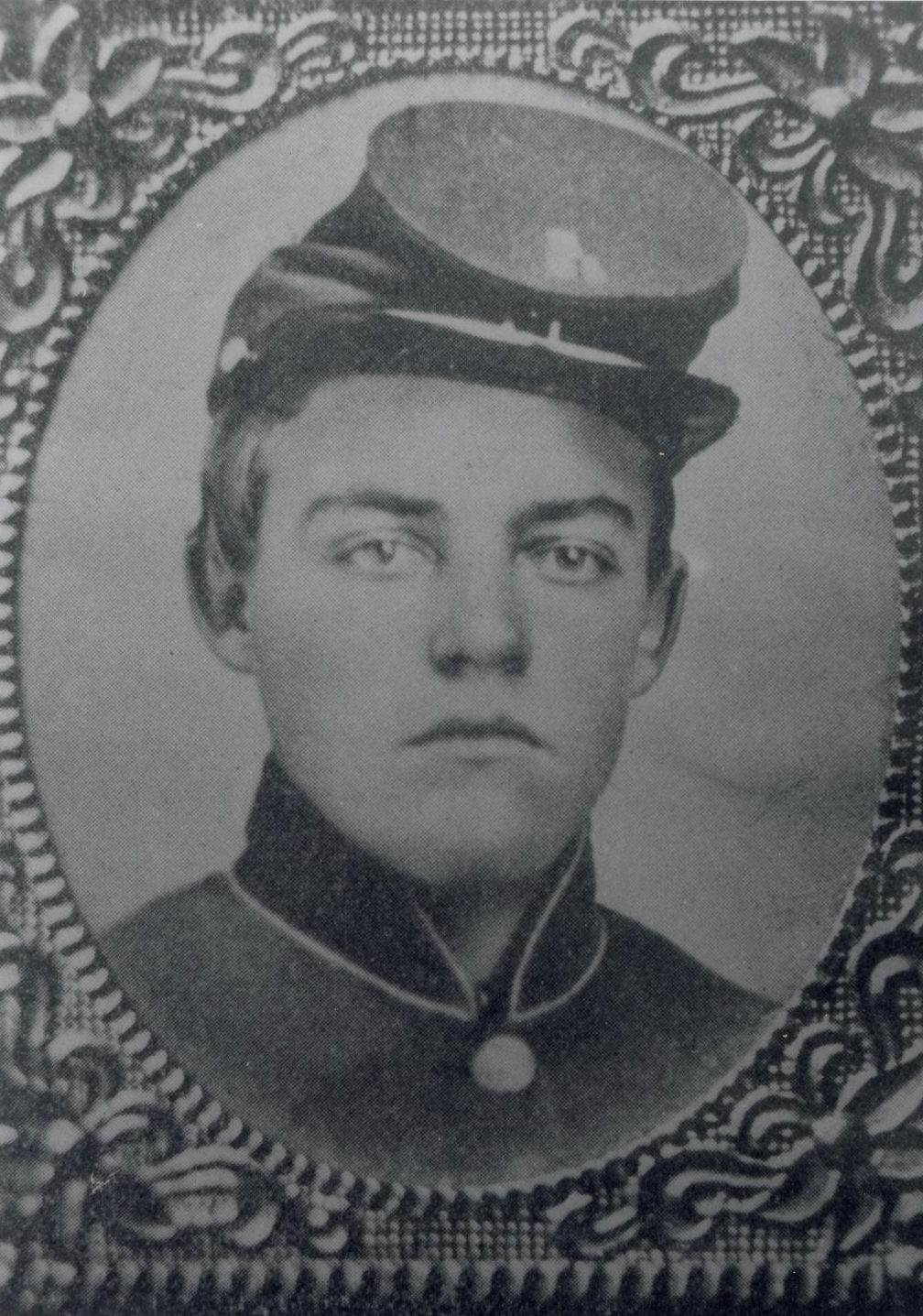
Hosea W. Rood, age 19.
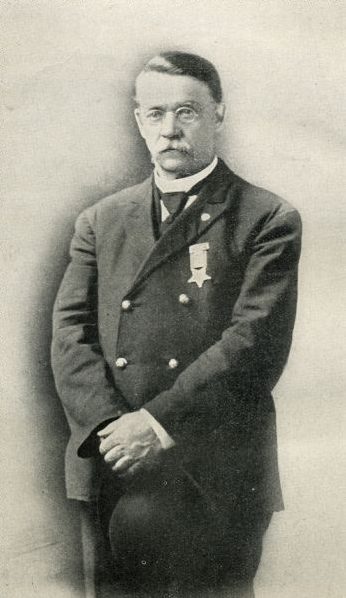
Hosea W. Rood, first custodian, or caretaker, of the GAR Memorial Hall.
After the bill passed in April of 1901, Governor Robert LaFollette appointed Rood custodian - or caretaker - of a GAR Memorial Hall. He immediately went to work calling for donations of war relics, flags, photos and literature for the hall.
In September 1901 the GAR Memorial Hall opened to the public on the second floor of the south wing of the Wisconsin State Capitol. As Rood said at the time, the Hall is meant to “teach the sons and daughters of our republic the value of our free institutions.” The hall also served as the headquarters for the Wisconsin Department of the GAR.
On February 27th, 1904, a fire broke out in the capital building. Except for the battle flags, much of what Rood collected lay in ashes, including the taxidermy of Old Abe. Almost immediately, Rood resumed collecting Civil War relics to replace those lost in the fire. His efforts resulted in what would become the foundation of the Wisconsin Veterans Museum’s collections.
Outside the GAR Memorial Hall, Rood had many side gigs. He held the position of "Patriotic Instructor" for the state, a job that let him travel the state, offering talks on patriotism and the history and symbolism behind our nation’s flag. He also served as a member of the board of managers of the Wisconsin Veterans' Home at Waupaca (King). Rood was also a noted writer of Civil War histories.
Rood remained custodian of the Memorial Hall until 1924 when a car accident and resulting broken leg forced him to retire. He and his wife, Ann, moved back to Milton where Rood continued to serve as the state’s Patriotic Instructor. Ann passed away on March 25, 1931, and Hosea passed on November 5, 1933. They are buried in Milton Cemetery.
The intent of the GAR Memorial Hall that Rood so often and eloquently communicated —remembrance of our veterans and education of our young people — is never far from the thoughts and actions of the museum staff today. In fact, these words Rood spoke in 1910 hang over the entrance to the museum galleries:


"A Part of the Story: Hosea Rood" was written by Greg Kreuger, Curator of Exhibits at the Wisconsin Veterans Museum. This post is from an article first published in the Spring 2026 issue of The Bugle, and was adapted for the web by James Kovaleski, Marketing Specialist.