
While Wisconsin did not become a territory until 1836 and a state until 1848, its ties to the American Revolution go far deeper than may be apparent. Many will think of the 250th anniversary of our independence as something that happens in the original thirteen colonies but those who made it possible, and those who descended from them, continued to move westward and to serve their country in times of need.
There are 41 veterans of the American Revolution known to be buried within the boundaries of the state of Wisconsin. The majority of those came from New England. Connecticut provided eleven, Massachusetts eight, and two each from New Hampshire, Rhode Island, and Vermont. Six came from New York. The remaining veterans were scattered among Pennsylvania, New Jersey, Virginia, North Carolina, and Georgia. Of these men it appears that 33 were private soldiers, two were sergeants, two were captains, and one a major. Two were waggoners, or teamsters, and one a quartermaster and one a drummer boy. The last of these men died in 1863, having lived to see the start of the Civil War.

Painting of John Jefferson
Equally important is that the descendants of these men also took up the call for freedom in 1861. It is the stories of those descendants that Wisconsin Veterans Museum shares and shows a tradition of service running back to their ancestors some eighty years before.
One example is John Jefferson, Major and eventual Colonel of the 8th Wisconsin Volunteer Infantry. He who was descended from the relationship between Thomas Jefferson (author of the Declaration of Independence) and his enslaved person Sally Hemings. John was a child of Eston Hemings, one of the children born of that relationship. Eston had moved to Wisconsin from Ohio where his family were successful in business. With the coming of war, John took the surname of Jefferson and served from 1861 until mustered out in 1864. Despite his name, he did not want his ancestry known, as it would have meant immediate dismissal from the segregated U.S. Army of the time.
The Union Army’s Rufus King was the grandson of the Rufus King who was a delegate from Massachusetts to the Continental Congress and the Constitutional Convention. The younger Rufus, having attended West Point, was appointed as a brigadier general at the start of the Civil War. He led the Wisconsin units early in the war, and eventually the division the Iron Brigade was in. Suffering from epileptic seizures, he resigned his commission to be a diplomat, eventually become the U.S. minister to the Papal States in Italy.
Charles Hamilton, Colonel of the 7th Wisconsin Infantry, was a descendant of Alexander Hamilton, the author of the Federalist Papers and the first Treasurer of the United States. Charles Hamilton would help form the regiment, later to be part of the famous Iron Brigade. Colonel Hamilton was severely wounded at the Battle of Gainesville, Virginia, in August 1862. He would later be a circuit judge in Milwaukee.
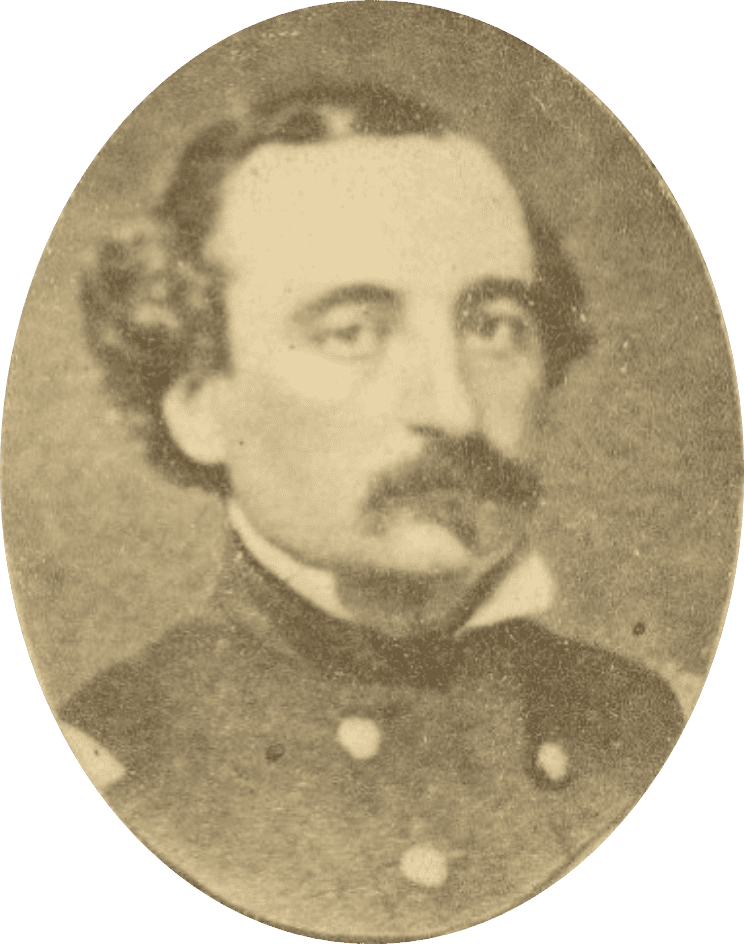
Photograph of Charles Apthorp Hamilton

Photograph of Rufus Dawes
Rufus Dawes, famous for his association with the 6th Wisconsin Infantry, was the great-grandson of William Dawes. William, along with Paul Revere, was instrumental in alerting the Massachusetts minutemen of the approach of the British to Lexington and Concord. Rufus was first a captain in the 6th Wisconsin and later its lieutenant colonel, being engaged in every fight the regiment, part of the Iron Brigade, was in until his mustering out in 1864. Returning to his native Ohio after the war, Dawes would serve in the U.S. House of Representatives; his son Charles became Vice President of the United States in the 1920s.
Even within the ranks of the common soldier, that sense of service remained. General Israel Putnam of the Revolution would have a grandson, John Day Putnam, in the 1st Wisconsin Infantry’s color guard. John Putnam served with the regiment throughout the war and later became a member of the Wisconsin State Assembly.
The 1st Wisconsin Infantry was the Badger State’s first unit ever sent to United States service, and included many militia units from the Milwaukee area. Colonel John C. Starkweather, himself a descendent of Revolutionary War soldiers, was its first commander. The regiment’s first flag incorporated a direct tie to the War of Independence: “In the name of Col. H.W. Gunnison,” read a regimental order in May 1861, “I have the pleasure of presenting to you a small relic of the first great struggle for American freedom, a piece of the flag borne by the Body Guard of General Washington upon the battle fields of the Revolution. The same shall be wedded to our colors and will invest them with the most hallowed associations of our Country’s history.”
Two of Wisconsin’s Native Nations, the Oneida and Stockbridge-Munsee, fought with distinction against the British. The Oneida distinguished themselves in the various campaigns in Upstate New York, most notably at Fort Stanwix in 1777. The Stockbridge-Munsee were part of the Massachusetts militia at Boston in 1775, later participating in campaigns around New York City from 1776 to 1778. Both nations were removed to Wisconsin before the Civil War, and members of both served in Wisconsin units from 1861 to 1865.
These and many others, descendants of those who had helped the thirteen colonies become the United States of America, would fight to preserve the Union. The memory of their ancestors would be a guide and inspiration.
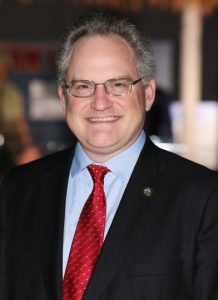
Chris Kolakowski
"Wisconsin ‘s Connections to the American Revolution" was written by museum director Chris Kolakowski and military researcher Marc Storch for the Wisconsin Veterans Museum. Images are courtesy of the Museum of Wisconsin Art and the Wisconsin Historical Society.

Marc Storch