

John McNally and others while serving in Afghanistan.
The intense experiences of military life often create special bonds among those who serve together. Veterans may refer to their comrades as brothers, sisters, buddies, or family. But in some ways, these descriptors don't quite capture the true nature of these unique relationships. In the following interview excerpts, several veterans elaborate on the essence of these connections.
Robert J. Webster served in Company G, 2nd Battalion, 7th Regiment, 1st Marine Division from 1966 to 1969 in Vietnam. During his tour, his unit conducted combat patrols, experienced sniper fire, and lived with the constant threat of booby traps. In this excerpt, he shares what makes the bond with his unit so strong.
WEBSTER: Well, we had to watch one another's backs. We had to fight to stay alive you know. I dunno--there’s something there that, you know, we know what we been through you know. And you can't talk to anybody that wasn't in about it because they--oh yeah, they understand. They don't understand you know. There ain't no way they could understand, you know, what you been through. We know what we did and where we were. I don't know, it's just something that's there, that will be there forever. They say, once a Marine, always a Marine, you know. I guess that's probably true of all the branches. They’re dedicated. That's why they went in. They wanted to be in that branch. That's going to be part of them for the rest of their life you know.
Laura Naylor Colbert served with the Wisconsin Army National Guard 32nd Military Police Company in Baghdad, Iraq during Operation Iraq Freedom. Her role included driving Humvees, searching for insurgents, conducting traffic stops, and training Iraqi police officers. She experienced improvised explosive devices, mortar attacks, and firefights. Although she knew some of the people in her unit before being deployed, she says the experience is what really forged the strong connection with her comrades.
COLBERT: It was good because I knew some of the people before I went; it wasn't like I was stuck with strangers. But when you're in a situation like that, you're going to get to know these people in and out, or inside and out, and you're going to know their history, their family, the way they work, what they like, what they dislike. And they become your family. And I know you've heard this before, everyone talks about the band of brothers, and how you fight now for your fellow soldier, as opposed to for the war, and that's exactly what happens. So, when you're over there, there's this connection that is--you can't describe, and to this day, when we talk to our fellow soldiers, it's just like, you just know, you just understand that we were there together, we went through the same thing together, and some things can be left unspoken, because, because of that connection.
John McNally served as an infantry lieutenant and special forces captain from 1996 to 2005. He deployed three times to Afghanistan during the Global War on Terror, participating in training the Afghan National Army, counterinsurgency, personal security, and building a base. He describes his unit as “pretty tight.”
McNALLY: Everyone at that point in Special F--we all know what we've gone through as far as training just to get into SF. And so, there's that immediate recognition of each other's capabilities, and then once you actually go into a combat theater, didn't matter. We--you know, sittin' up on that hill in the Arghandab Valley for three weeks we had some pretty good--pretty good political discussions at night. Everyone had different views of things. But the camaraderie is such that morning came around and it was, ‘Okay, what's the mission for the day?’ Didn't matter what the heck was discussed the night before, how heated the argument became, it was, ‘All right, we need to get the job done.’ And I can tell--I mean, it's the closest thing to family I think you can get without--maybe even closer to family at some points, you know. Each other's lives are at stake, and you're going through such intense situations where you just—you’re at peak alert everyone is just ready. And you just go through some really tough situations together. And those guys I will never forget for as long as I live.
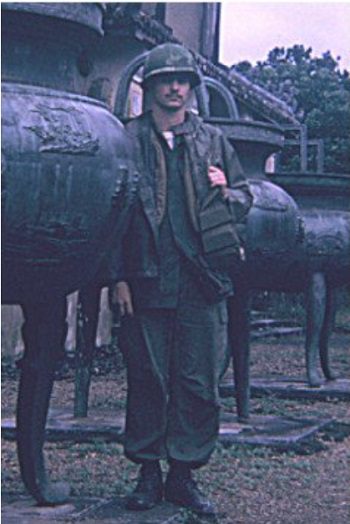
Photo of Michael Clark during his service in Vietnam. Photo provided by Michael Clark.
Michael D. Clark served as an operating room technician at the 85th Evacuation Hospital in Phu Bai, Vietnam from 1970 to 1971. He describes how he and his fellow soldiers supported each other through the many challenges of taking care of wounded soldiers.
CLARK: Tried to get rid of the thoughts from the day with this accumulating in your mind, not being able to process what you have seen. It seemed like every, about every four or five weeks, my mind would just implode. It's kind of the deer in the headlights. You could look somebody in the eye, but not make eye contact with them. It's like they're looking right through you or they're not seeing you. And it takes about a week to get through that. It was just the deepest, darkest depression that you could ever imagine. And that's when the guys would pull together. That's when you needed your core group. I have three guys that I consider brothers from Vietnam. And when you're in that depth of depression, the word would go out, and we would know not to leave that guy alone for a while. Somebody had to be with him. And you open up your deepest, darkest parts of your soul, and you get to know each other like you can't know anybody else. I can't be as honest and open with my wife, my family, anyone as much as I was with these guys, and they would open up with you and I call it that we became connected at the soul. I mean we almost became a part of each other. And we would help each other through that, and it would be me one week and it'd be another guy the next week and be another guy the week, and for a couple days you'd cover for the guy because it's almost like they're non-functional for a couple of days until they start to work through this.
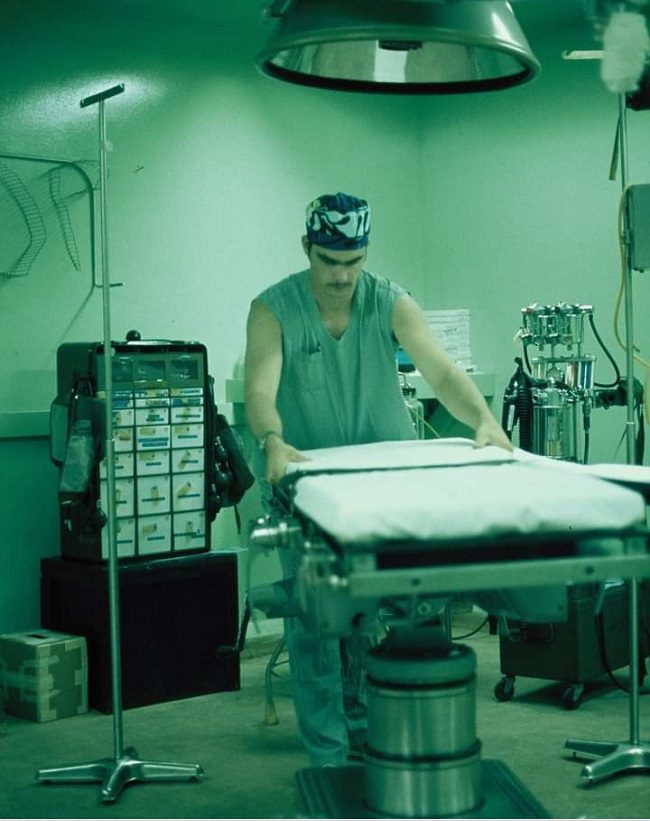
Michael Clark prepares Operating Room 1 at the 85th Evacuation Hospital in Phu Bai, Vietnam. Photo provided by Michael Clark.
The connection Clark felt with his fellow soldiers was so strong that, although he desperately wanted to leave Vietnam, he knew he would miss his connection with his “brothers.”
CLARK: I wanted to get out of there so bad. All I wanted to do was go home, but yet when I went to the airport, I actually cried because I was leaving the guys in my unit. And I knew the camaraderie we had, that depth, that connection we had at the soul, that I would never experience that again in my life.
INTERVIEWER: Have you?
CLARK: No. No. Unless you're put in a position similar to that, I can't imagine that you would, that anyone would ever know.
For more resources on these veterans, please click on their names: