
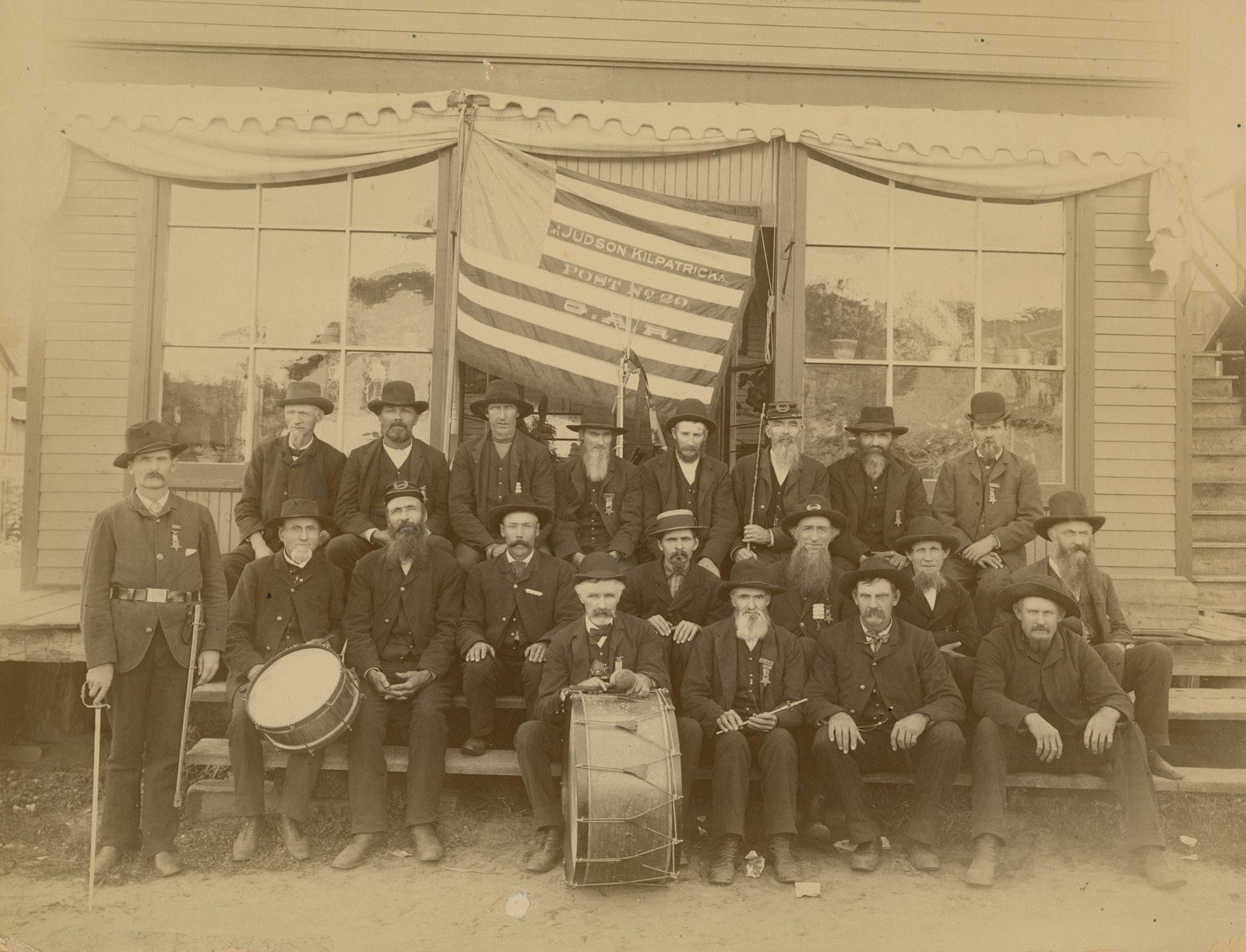
Members of the Judson Kilpatrick Post No. 29 in Oakdale, Wisconsin, ca. 1880
The Wisconsin Veterans Museum got its start 125 years ago as G.A.R. Memorial Hall. Maybe you’ve seen those three letters—G.A.R.—elsewhere, like at a cemetery, on a historic building, or in an old newspaper article. What does G.A.R. mean and how is it connected to the museum?
G.A.R. stands for Grand Army of the Republic, the first major veterans’ organization in the United States. Formed in 1866 for men who served in the Union Army, Navy, or Marine Corps during the Civil War, the G.A.R. provided veterans with an opportunity to gather, socialize, and reminisce at regular meetings. The organization lobbied for veterans’ benefits, particularly pensions for veterans and their families. It also took on an educational mission that included ensuring that future generations remembered the service and sacrifices that they made during the Civil War to help preserve the Union and uphold freedom for all.
Serving as the model for modern veterans’ organizations like the American Legion and V.F.W., the G.A.R. consisted of a national organization that was divided into departments (usually on the state level) and further divided into individual posts located in cities and towns. Wisconsin was the second state to organize a G.A.R. department. Individual posts were numbered and named after people. Some posts in Wisconsin chose national figures like Abraham Lincoln and William Sherman, others picked state politicians and leaders like governors Lucius Fairchild and Louis Harvey, while many selected a prominent Civil War veteran from their community, sometimes the first to enlist or the first to die in service. (Contact the museum if you’d like to learn about the namesake of the Wisconsin G.A.R. post closest to your home)
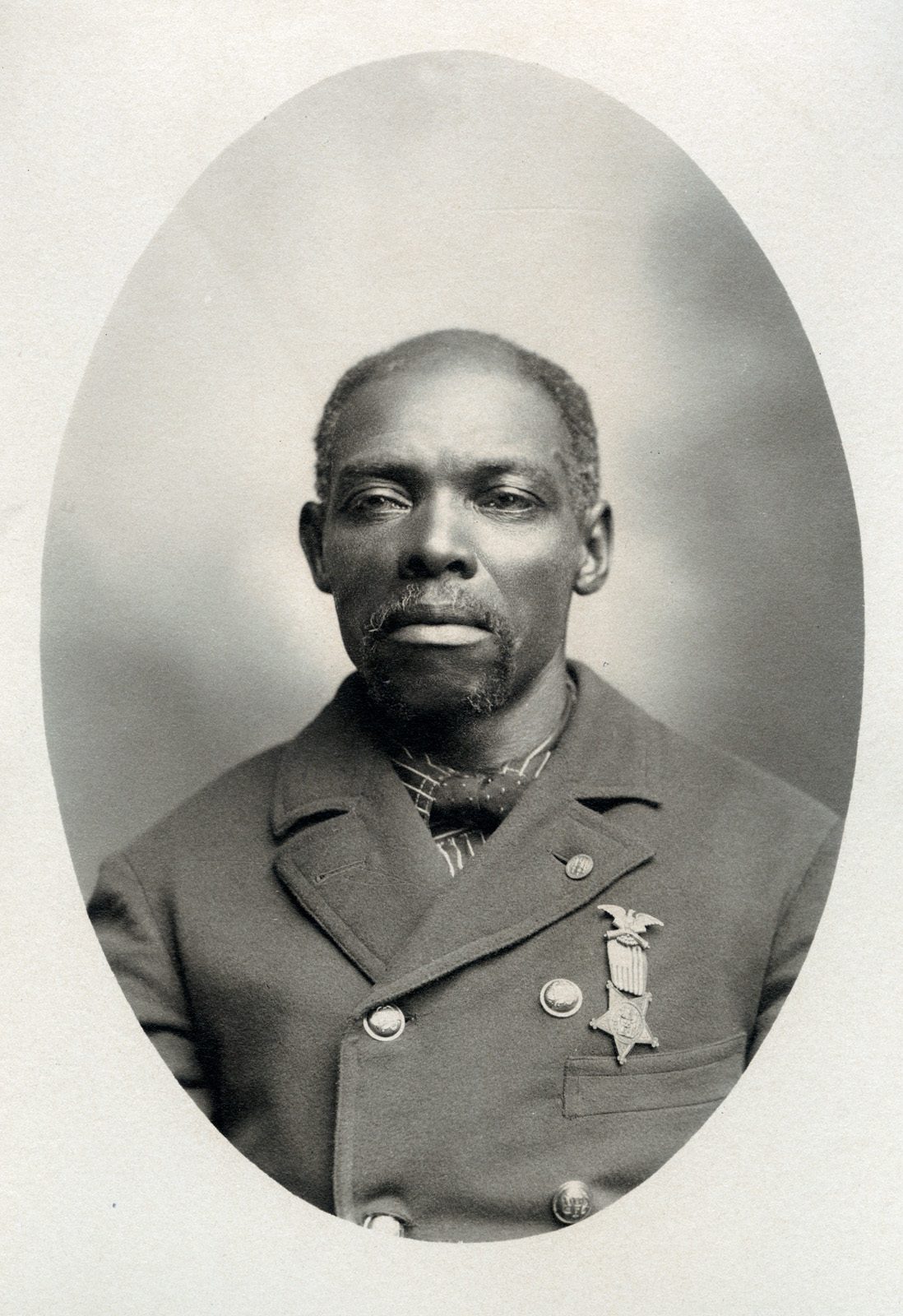
Horace Artis, a member of the George Eggleston Post No. 133 in Appleton, Wisconsin, ca. 1901
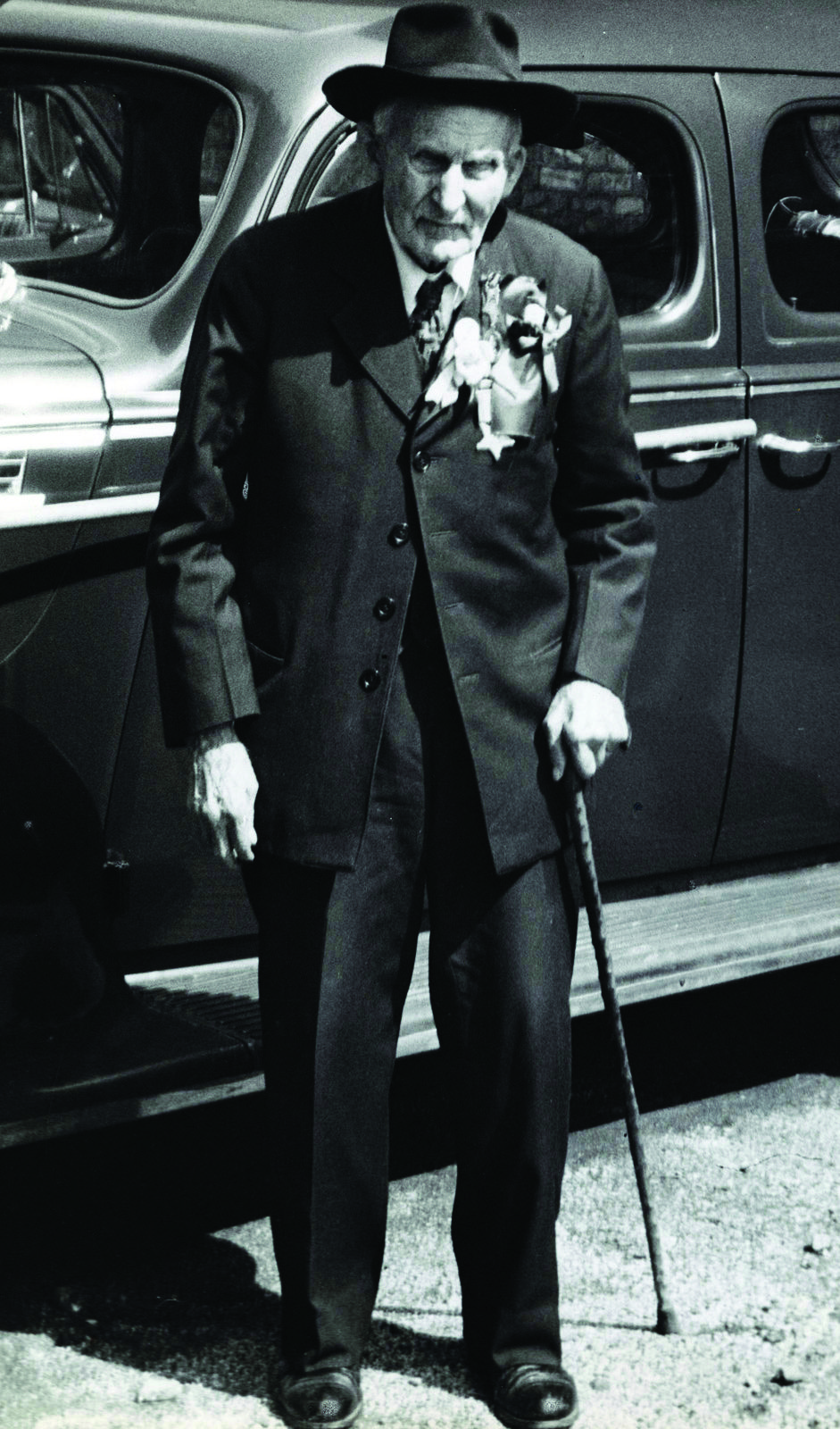
Lansing Wilcox, the last surviving G.A.R. member in Wisconsin, ca. 1951
After an initial surge, membership in the G.A.R. declined during the 1870s before booming again in the 1880s and 1890s. At its peak, the Wisconsin G.A.R. had over 250 posts and almost 15,000 members. Wisconsin hosted four national G.A.R. encampments and three Wisconsin veterans were elected to lead the national organization. Over time, the Civil War generation began to pass away and the G.A.R. began to fade. Lansing Wilcox was the last member in Wisconsin when he passed away in 1951 at the age of 105.
Still, 75 years later we see signs of the G.A.R. around the state. Members were dedicated to properly honoring their deceased comrades. As a result, today the graves of many Civil War veterans are decorated with five-pointed star markers that read “GAR 1861-1865.” In 1887, the Wisconsin G.A.R. was largely responsible for the establishment of a home near Waupaca for poor, ill, and disabled veterans and their families. Originally called the Grand Army Home, today it is the Wisconsin Veterans Home at King. Football fans attending a home Badger game have likely seen or walked through the Camp Randall Arch which is flanked by statues of a young Civil War soldier on one side, and an aged Civil War veteran on the other. Old Abe the War Eagle perches at the apex. The Wisconsin G.A.R. helped dedicate that monument in 1912.
In 1901, the Wisconsin G.A.R. successfully lobbied the state legislature to establish a state-run museum to preserve and share the stories of Wisconsin Civil War veterans. G.A.R. members oversaw the operation of the museum for more than three decades. As time passed, the scope of the museum expanded to include veterans of subsequent conflicts and today, 125 years later, the Wisconsin Veterans Museum continues to carry out the vision of the G.A.R. to ensure that stories of Wisconsin men and women who serve in the military are remembered by future generations.

"A Part of the Story: The Grand Army of the Republic" was written by Russ Horton, Archives Collections Manager at the Wisconsin Veterans Museum. Article adapted for the web by James Kovaleski, Marketing Specialist. This post is from an article first published in the Spring 2026 issue of The Bugle.